|
|
Welcome to GordonBahary.com
|
|
BIOGRAPHY
|
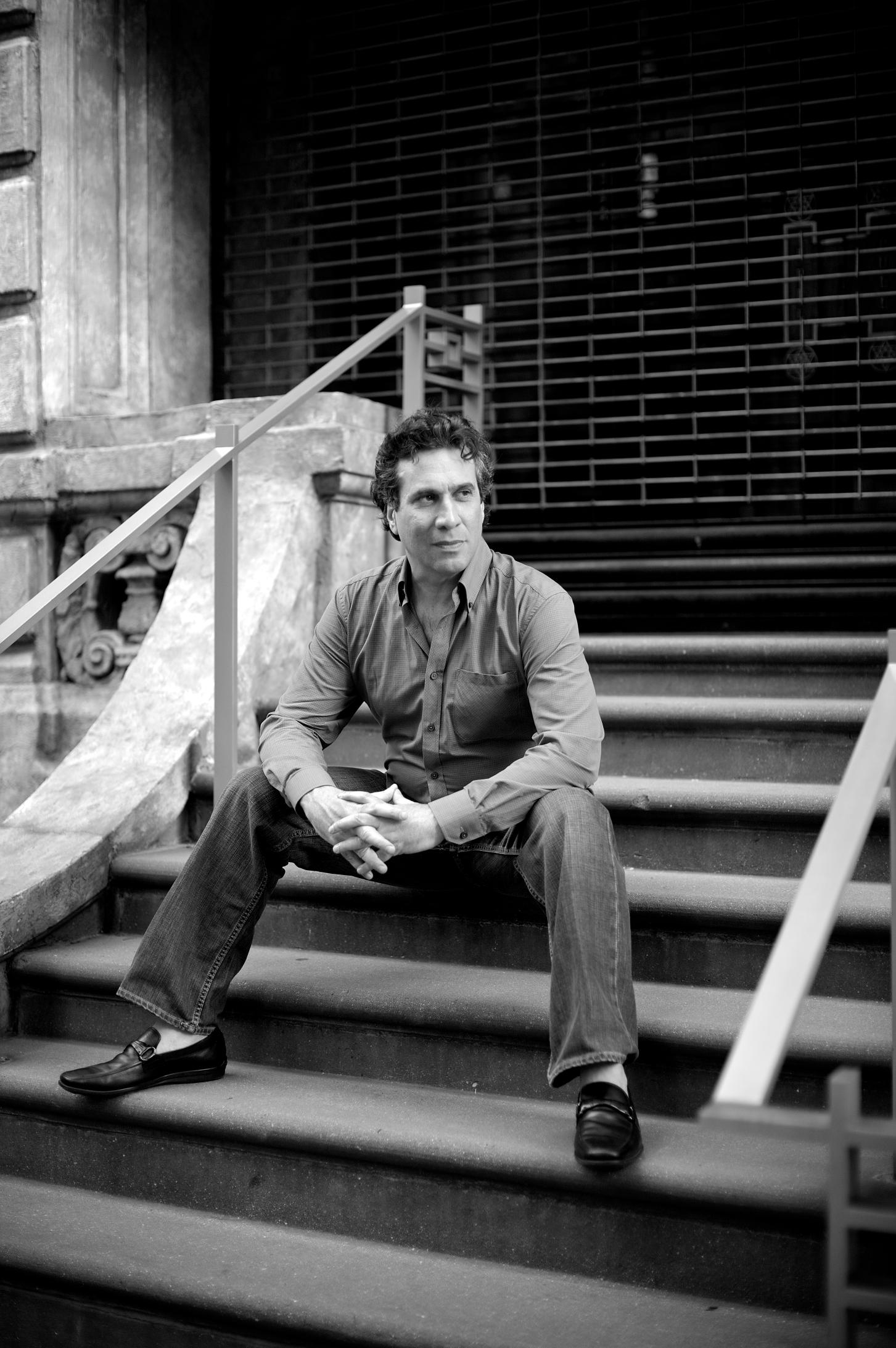
The story... Gordon Bahary, born in Long Island, New York, started writing songs at age 10, self-taught on the piano. His dream as a kid was to have his own radio station. With radios and parts, and after sparks, electrical shocks, and blown fuses in his house, he produced a signal from a radio that could be heard on another radio down the hall. He eventually made the transmitter produce sound on FM. By climbing trees and his roof, when his parents weren’t aware of it, he built an antenna and amplifier so that signal could reach his friends in school. On his show, he imitating voices and borrowed his family’s records to play, and eventually hosted a call-in show. The little station gave him an opportunity to listen to musical detail more closely on headphones. As the power of his transmitters grew over time, the range expanded to hundreds of miles at night on AM radio and across the Atlantic on shortwave radio. Callers would call-in from Boston University to Florida in the evening (AM and FM known as "KW" and on shortwave as “The Voice of Communism” Bahary’s parody on the cold war). These old shows are now listed in radio history books under "clandestine radio" and have been archived by listeners on the Web). This was until several years later one night, when the FCC hunted him down, spreading the word that he’d better dismantle the station, or face grave consequences. Humorously now, but in a panic at the time, the transmitter was buried underground a 4am as neighbors heard clanging and woke up to watch outside their windows; thinking something other than a transmitter was being buried. For now, his broadcasting days were over. Writing songs became his main passion; inspired by The Beatles, Stevie Wonder, Aretha Franklin, and Harry Chapin (his next-door neighbor at the time). Bahary tried to reach Stevie Wonder for months to get his music heard, running up phone bills that he dreaded his parents might see the detail of. When Wonder heard Bahary's songs in 1975, he met with Bahary in L.A. and gave him the generous and kind opportunity to watch the recording of "Songs In the Key of Life" at Crystal Studios in L.A. At 15 years-old, there was the dilemma of attending 7th grade while still working with Wonder. His parents were courageous and supportive against much opposition in his school. He managed to graduate studying alone, while traveling between L.A. and New York and from studio to studio. At these sessions, Bahary showed Wonder some new possibilities of synthesizer sounds he could create, helping enable Wonder to play various instruments electronically through a keyboard. After watching the creation of songs like "Pastime Paradise" “As” “Isn’t She Lovely” “I Wish” “Knocks Me Off My Feet” and many others, Bahary was never the same; he had been “injected with a phonograph needle". Wonder lovingly encouraged him with a "thank you" credit on the album and spending time critiquing his songs each week, and was a compassionate friend and spiritual mentor. Since then, “Song In the Key of Life” of course became the greatest album ever recorded in music history (according to critics and music journalists). Bahary was too young to know he was watching history in its creation; a humbling experience. Harry Chapin, in his usual magnanimous way, was an occasional mentor of songwriting for Bahary when he began working with Wonder; generously stopping by Bahary’s house to help with his unpolished songwriting. He also taught him about charity work and world hunger. The last time they met, Chapin told him, "You know, you can always tell a hit… because it sounds like it's always been there. You’re almost there buddy. See you later…" The truth is, Bahary was also discouraged when alone after these sessions, feeling he could never reach Chapin's level of writing, or that of Stevie Wonder. The task at hand was to stop comparing himself to great songwriters like them, and to simply do his best. Bahary never got to share his music with Chapin again, and felt a very devastating loss, as did the world. One day, when Chapin came by to edit Bahary's songs, the over-anxious teenager said, "Oh, just one more song, Harry? Listen to this one?" and Chapin said, "Sure, go ahead." Upon leaving he left a large envelope behind and ran out. Bahary called Chapin's home minutes later to say he would drop it by, but his assistant said, "Oh sweetie, you missed him. Harry was late for a concert and had to take a helicopter..." That's part of who Chapin was. Part of the proceeds of Bahary’s upcoming album will go to the organization Chapin founded: World Hunger Year (WHY). See: www.whyhunger.org. After playing songs each week by phone for one another, and exploring the world of sound, Wonder asked Bahary to collaborate on his follow-up album, "Journey Through the Secret Life of Plants" (containing the song “Send One Your Love”). This recordings took place in L.A. and in Bogalusa, Louisiana, at Studio in the Country. This was a Paramount Studios motion picture of the same name (also aired on Bravo television networks). There is video footage of Bahary and Wonder at these sessions on YouTube (type: "Stevie Wonder Secret") In 1978, moving more into jazz, Bahary collaborated with groundbreaker and Album of the Year Grammy-winner, Herbie Hancock, on his album "Feets Don't Fail Me Now". Through much laugher and Hancock’s positive and creative energy, they explored creating their own instruments with Herbie’s producer David Rubinson, at The Automat Studios, in San Francisco, where the Pointer Sisters and Chicago recorded with Rubinson. Hancock was able to perform instruments such as harps, violins, violas, and horns through these sounds on his keyboards. This was before digital memory was created, so these sounds were created through a combination of hundreds of buttons, wires and modules, and could never be exactly duplicated later. On one occasion, Stevie Wonder’s housekeeper cleaned the synthesizer’s panel and accidentally moved the controls. When Bahary returned home, the phone was already ringing and Stevie said, “You have to fly back to L.A. We lost it all…” The trumpets had become bumble bees. Later that year, legendary artist keyboardist Ramsey Lewis (“Sun Goddess” with Earth Wind and Fire) asked Bahary to write and produce three songs for his new album for CBS Records, in Chicago at Columbia Recording Studios. Lewis’s style was fantastic to witness and Bahary tried not to emulate Earth Wind & Fire’s sound, although it was tempting to write music in their style for Lewis. He collaborated with Miles Davis' drummer Idris Muhammad experimenting with fusions of jazz and pop, after he heard him playing African log drums on Ralph MacDonald's "The Path". Being around these creative and innovative artists was a gift of inspiration. As the soundscape widened, Bahary had a terrific experience briefly working with motion picture director Francis Ford Coppola, who invited Bahary to his Zoetrope Studios in San Francisco to explore synthesized sound effects for his motion picture “Apocalypse Now”. He had heard about Bahary’s sounds with Wonder and Hancock. Italian director and father of Francis, Carmine Coppola, made the initial contact with Bahary saying "you must come to California to meet Francis and show him these sounds!" Francis Ford Coppola asked, “Can you make a helicopter sound in key with Wagner’s music?” Bahary did so, but being a young 19 years was intimidated and at a loss when Coppola said, “Make it… Sexier. Sexier!” Bahary phoned home and asked his parents and friends, “What does he mean by make the helicopter sexy? I don’t want to mess this up.” In 1980, it was becoming difficult to keep up with Wonder’s schedule and energy level, manage his label, produce and write, while Wonder was on the road making the decisions. Wonder nevertheless gave him a generous grant to produce and write for his artists, on Wondirection Records (distributed by Motown). Wonder’s musicians included Ray Parker Jr. who wrote and sang “Ghostbusters”. Bahary wrote and produced for R&B/Pop singer Odia Coates (who sang the Number-1 hit duet "Having My Baby" with Paul Anka) for Wonder's label. Attempting to try singing himself, in 1983 Bahary was signed as an singer/songwriter under his stage name, “Twilight 22” by Vanguard Records, the largest independent record label at the time (the label's roster included folk-rock artist Joan Baez and thousands of classical and jazz titles). He reached out to drummer Joseph Saulter, whom he met through Herbie Hancock, to help with vocals and lyrics. The first release "Electric Kingdom" was a hybrid of Hip Hop in its earliest stage, middle-eastern melodies Bahary’s father exposed him to, and pop production. It reached number 5 on the Billboard chart, with Michael Jackson, Paul McCartney, Lionel Richie, and Kool & The Gang the same week in the Top Ten. It was highest grossing recording in Vanguard’s 35-year history as a label, and the third most played song on R&B radio in the U.S. for six months. Record executives called these songs "the boiler plate of today's Hip Hop", but Bahary wanted to branch into more mainstream pop, inspired still by Stevie Wonder, as they continued to collaborate. Things changed and got more difficult, as there was a disparity between him and his fan base. Vanguard was acquired by music icon Lawrence Welk only a year later and Bahary’s catalog of hit songs was acquired by Polygram and later Universal Music. More than 30 artists re-recorded Bahary’s songs, and K-Tel Records and Rhino Records issued over 10 greatest hits compilations based largely on Electric Kingdom and its sound. The group Tag Team (“Whoomp There It Is”) used Bahary’s music as the backbeat and samples for their follow-up hit song. By 1985, Electric Kingdom was certified multi-platinum at seven million copies sold world-wide. Subsequent releases "Siberian Nights" "Mysterious" and "In the Night" and "Street Love" reached the Top 40 on the Billboard charts as well, generating over 2 million views to-date on YouTube. In 1988, Bahary produced other artists at his recording studios (Electric Kingdom Studios in Soho, Manhattan) housing a custom-made "Synclavier" keyboard and Direct-to-Disk digital music system. Only a handful of these existed of its type and was a draw for artists to the studio. In 1993, he co-produced, arranged and performed on the debut album of 5-year old television actor/singer Raven Symone (the young Olivia from television’s "The Cosby Show", "That's So Raven", and the motion picture “Cheetah Girls”). They worked closely together for several months, and Symone stole his heart with her talent, old soul, and sweetness. The album "Here's to New Dreams" (on Epic Records) made history in the Guinness Book of World Records, for the youngest signed recording artist. His next release in 1997, "Genesis: The Creation of the Earth", is an all-instrumental work, with full synthesized orchestra on the Synclavier keyboard; the first release of its kind, also using his own technology he once shared with Stevie Wonder in earlier years. It reached the New Age charts internationally and was aired on NPR. The radio bug hadn’t left him though. The late William Hanna, founder of Hanna Barbera (co-creator of the animated series The Flintstones, The Jetsons, Yogi Bear) heard Bahary's original voice characterizations, and called Bahary asking him to come back to Los Angeles to “make cartoons” as Hanna phrased it. More recently, Bahary was featured as one of the characters in the animated television series "Rugrats: all Grown Up" and was signed to Imperium 7 Management in Los Angeles in 2004. Other voice characterizations of his were used on video games by Vivendi. A great experience reminiscent of the radio days. Stevie Wonder invited Bahary to spoof Howard Stern on his national radio show, with one of his voices. Wonder performed then introduced Bahary as the mystery guest after a 10-minute suspense Wonder created. They took Stern off guard right before he left FM for Satellite radio. Stern wrote about the wild spoof the next day on his Web site. In 2008, Bahary and Stevie Wonder co-hosted a morning-drive comedy radio show on radio station KJLH in Los Angeles, and Wonder later performed his songs live on-air. Bahary feels he could have never experienced the level of encouragement he did, without the generosity, love and humility of his mentors; these great geniuses mentioned here. Beyond being people with great creative vision, they were generous, compassionate and fair people. Bahary still wonders if his music will ever sound like "it's always been there..." as Chapin once said referring to hit songs. Instead, with each day that passes, the way even one person is touched by music means everything. Gordon Bahary's newest solo album, entitled "Unbreakable", is scheduled for release in March of 2010. Bahary writes, sings, and performs all instruments, ranging from up-tempo Latin and Mediterranean influences, to jazz elements inspired by Herbie Hancock, to R&B influences of Motown artists Bahary worked with. The songs are written from his "old school" of Pop music. The album crosses-over the boundaries of age, culture, and genre. Thank you for reading! Visit: MySpace.com/gordonbahary "Unbreakable" Available on iTunes and retail outlets in March 2010. CONTACT: info@gordonbahary.com |